Difference between revisions of "Magnetometry"
| (One intermediate revision by the same user not shown) | |||
| Line 1: | Line 1: | ||
==BEC== | ==BEC== | ||
===Spin-echo-based magnetometry with spinor Bose-Einstein condensates=== | ===Spin-echo-based magnetometry with spinor Bose-Einstein condensates=== | ||
| − | In this work they have noticed that magnetic field created by ac line disrupts their experiments, by applying a magnetic field with an opposite phase they reduce the noise to 1 nT. As a magnetometer they achieved 12 pT/sqrt(Hz) with spatial resolution 100 um^2. | + | '''<span style="color:DarkGreen"> Abstract. </span>''' In this work they have noticed that magnetic field created by ac line disrupts their experiments, by applying a magnetic field with an opposite phase they reduce the noise to 1 nT. As a magnetometer they achieved 12 pT/sqrt(Hz) with spatial resolution 100 um^2. For the experiment they average over 10 points. |
'''<span style="color:DarkGreen"> Technicalities. </span>''' For the coils they use low ripple current source <2uA (Newport 505), they insert permalloy plates into the room walls. The BEC of <sup>87</sup>Rb is prepared in a crossed far-off resonant optical trap (FORT with w<sub>axial</sub>=30 Hz, w<sub>rad</sub>=100 Hz), 5*10<sup>3</sup> atoms are prepared in F=2. | '''<span style="color:DarkGreen"> Technicalities. </span>''' For the coils they use low ripple current source <2uA (Newport 505), they insert permalloy plates into the room walls. The BEC of <sup>87</sup>Rb is prepared in a crossed far-off resonant optical trap (FORT with w<sub>axial</sub>=30 Hz, w<sub>rad</sub>=100 Hz), 5*10<sup>3</sup> atoms are prepared in F=2. | ||
| + | |||
| + | '''<span style="color:DarkGreen"> Idea. </span>'''The rf Hahn-echo pulse sequence is sent: <math>\pi/2\rightarrow\pi\rightarrow\pi/2</math> If there is an external varying magnetic field the phase measured in this experiment is: <math>\theta = \frac{g_F \mu_B}{\hbar} \left[ \int_0^{\tau/2}b(t)dt- \int_{\tau/2}^{\tau}b(t)dt \right]</math>. The sensitivity of the magnetometer for a single measurement is given by: | ||
| + | <math>\frac{\delta<S_z>}{d<S_z>/db_{ac}}</math>, where <math>{\delta<S_z>}</math> is uncertainty of a single measurement. | ||
| + | |||
| + | One more trick to raise the accuracy is to spatially separate atoms with different m<sub>F</sub> values, thus to obtain all of them in one measurement. | ||
Latest revision as of 17:39, 28 December 2019
BEC
Spin-echo-based magnetometry with spinor Bose-Einstein condensates
Abstract. In this work they have noticed that magnetic field created by ac line disrupts their experiments, by applying a magnetic field with an opposite phase they reduce the noise to 1 nT. As a magnetometer they achieved 12 pT/sqrt(Hz) with spatial resolution 100 um^2. For the experiment they average over 10 points.
Technicalities. For the coils they use low ripple current source <2uA (Newport 505), they insert permalloy plates into the room walls. The BEC of 87Rb is prepared in a crossed far-off resonant optical trap (FORT with waxial=30 Hz, wrad=100 Hz), 5*103 atoms are prepared in F=2.
Idea. The rf Hahn-echo pulse sequence is sent:  If there is an external varying magnetic field the phase measured in this experiment is:
 ![\theta = \frac{g_F \mu_B}{\hbar} \left[ \int_0^{\tau/2}b(t)dt- \int_{\tau/2}^{\tau}b(t)dt \right]](/images/math/9/d/a/9da94c7c984023e556b7a26afbf0b67a.png) . The sensitivity of the magnetometer for a single measurement is given by:
. The sensitivity of the magnetometer for a single measurement is given by:
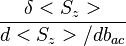 , where
  is uncertainty of a single measurement.
One more trick to raise the accuracy is to spatially separate atoms with different mF values, thus to obtain all of them in one measurement.
